Form 145 & Form 146: The NRI Guide to the New 15CA/15CB Replacement

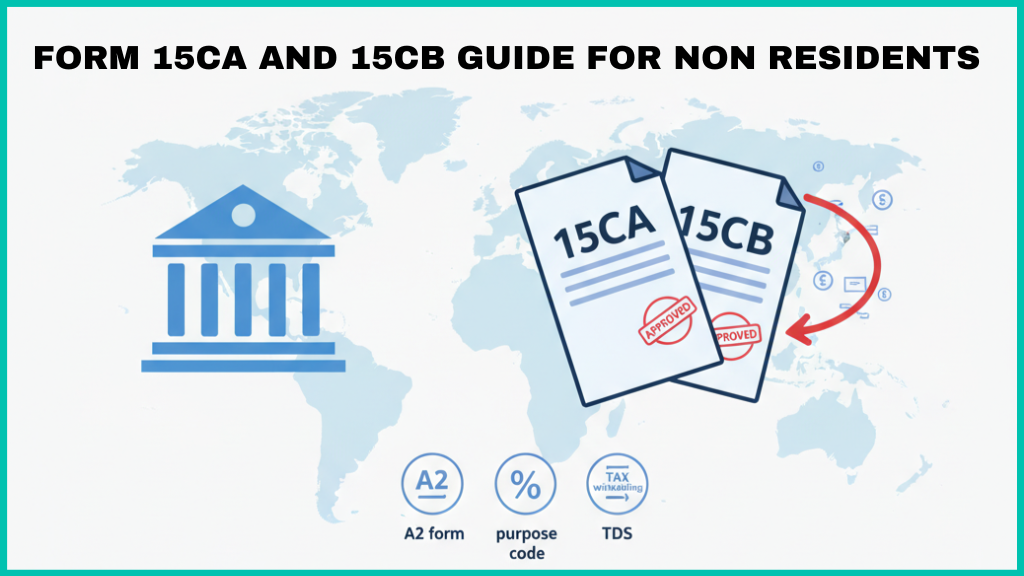
If a bank has ever asked you for “15CA and 15CB” before releasing money out of India, that framework ended on 1 April 2026. It has been replaced by Form 145 (your declaration) and Form 146 (the Chartered Accountant’s certificate). This guide explains exactly what changed, what stayed the same, and precisely what NRIs and OCI holders must now do to move money abroad without their transfer getting stuck.
For years, the two forms every non-resident learned to dread were Form 15CA and Form 15CB. From 1 April 2026, under the new Income-tax Act, 2025 and Income-tax Rules, 2026, those forms no longer exist. In their place are Form 145 and Form 146.
Here is the reassuring part, and the important part, in one sentence: the form numbers changed, but the core duty did not. You still have to tell the tax department about money leaving India for a non-resident, still have to make sure the right tax is handled first, and your bank still will not release the funds until you do.
This guide is written for the people who actually deal with this — NRIs and OCI holders repatriating money from India: sale proceeds, rent, interest, dividends, or moving funds from an NRO account abroad. If you want the older framework for reference, we’ve kept our original 15CA/15CB guide live, but the rules below are the ones that apply now.
The 30-second answer
- Form 145 is your declaration as the person sending money out of India. It replaced Form 15CA. You file it online, before the remittance.
- Form 146 is a Chartered Accountant’s certificate confirming the tax position on that remittance. It replaced Form 15CB. You only need it in specific cases (explained below).
- Both took effect for remittances made on or after 1 April 2026, under the Income-tax Act, 2025 and Rule 220 of the Income-tax Rules, 2026.
- In most cases, your bank will not process the transfer without the correct filing.
Do You Need to File Form 145 & 146?
The 2026 replacement for 15CA & 15CB. Answer 4 quick questions to see what likely applies to your remittance — instantly, and privately.
No sign-up · Nothing stored · Takes under a minute
Old form, new form: the complete 2026 mapping
Because so many related forms and sections were renumbered at the same time, here is the full translation table. Bookmark this — it resolves most of the confusion floating around online.
| What it does | Old (till 31 Mar 2026) | New (from 1 Apr 2026) |
|---|---|---|
| Remitter’s declaration | Form 15CA | Form 145 |
| CA’s certificate | Form 15CB | Form 146 |
| TDS return on payments to non-residents | Form 27Q | Form 144 |
| Property TDS challan-statement (resident seller) | Form 26QB | Form 141 |
| Lower/Nil TDS certificate application | Form 13 | Form 128 |
| TDS on payments to non-residents (section) | Section 195 | Section 393 |
| Lower/Nil deduction certificate (section) | Section 197 | Section 395 |
| Remittance reporting rule | Rule 37BB | Rule 220 |
The governing provisions for Form 145 itself are Sections 393, 395, 397 and 462 of the Income-tax Act, 2025, with the filing thresholds set out in Rule 220 of the Income-tax Rules, 2026.
Is this just a rename, or a real change?
Honestly? Mostly a restructuring, not a reinvention. If you understood 15CA/15CB, you already understand 90% of 145/146. The obligation to report, the ₹5 lakh threshold logic, the four-part structure, the role of the CA — all continue.
But five genuine changes are worth knowing, because they catch people out:
- UDIN is now mandatory on Form 146. The CA must generate a Unique Document Identification Number from the ICAI portal for the certificate. This was not required for the old 15CB. A Form 146 without a valid UDIN is not acceptable.
- The foreign recipient’s TIN is now mandatory. You need the overseas recipient’s Tax Identification Number, not just their name and address.
- More exemptions. The list of transaction categories that don’t require filing expanded (to around 33 categories, up from 28).
- Electronic delivery to your bank. The system is more integrated — filings flow electronically to your Authorised Dealer (AD) bank, reducing paper hand-offs.
- The Part B shortcut is clearer. If you hold a lower/nil TDS certificate from the Assessing Officer, you file Part B and skip both Part C and the CA’s Form 146 entirely — saving cost and time (more below).
Which Part of Form 145 is yours?
This is the decision that matters most, because choosing the wrong Part gets your filing rejected by the bank. Form 145 has four parts, and exactly one applies to your remittance. Work through it in order.
The two questions that decide everything:
- Is the remittance chargeable to tax in India?
- Is your aggregate to this recipient in the financial year more than ₹5 lakh?
Here is how the answers map to a Part:
| Your situation | Part | Form 146 (CA cert) needed? |
|---|---|---|
| Remittance is taxable, and aggregate is ₹5 lakh or less in the year | Part A | No |
| Remittance is taxable, exceeds ₹5 lakh, and you have an AO lower/nil certificate (Section 395) | Part B | No |
| Remittance is taxable, exceeds ₹5 lakh, and you do not have an AO certificate | Part C | Yes |
| Remittance is not taxable under the Act (and not in the specified exempt list) | Part D | No |
Read that table twice — it is the entire logic of the form. Form 146 is required only for Part C. Every other route avoids the CA certificate.
Not sure which Part is yours? We’ve built a quick, private checker below — answer three questions and it tells you the likely Part and whether you’ll need a CA certificate.
Which Part of Form 145 do you file?
Answer 3 quick questions. Nothing is stored or sent — the result appears instantly on your screen.
Q1. Is the money you’re sending abroad chargeable to tax in India? (e.g. rent, interest, capital gains, most business income = taxable)
Q2. Is your total to this recipient more than ₹5 lakh this financial year?
Q3. Do you have a lower/nil TDS certificate from the Assessing Officer (Section 395, the old Section 197)?
Form 145 — Part A
Your remittance is taxable but your total to this recipient is ₹5 lakh or less this year. You’ll likely file Part A. No CA certificate (Form 146) needed.
Form 145 — Part B
You have an Assessing Officer’s certificate under Section 395, so you file Part B and quote that order. No Form 146 needed — the AO certificate replaces it.
Form 145 — Part C (with Form 146)
Your remittance is taxable, over ₹5 lakh, and you don’t have an AO certificate. You’ll file Part C and need a Chartered Accountant’s Form 146 (with a valid UDIN) first.
Form 145 — Part D
Your remittance isn’t taxable, so it’s likely Part D — or it may fall in the exempt list where no filing is needed. No Form 146 needed. Your bank confirms based on the purpose code.
Let’s confirm your case
Taxability decides everything here, and it depends on the exact nature of your payment and any DTAA benefit. It’s worth a 2-minute check before you file.
Indicative only — not tax advice. The correct Part depends on your full facts. Always confirm before remitting.
When you actually need Form 146 (and when you don’t)
The CA certificate — Form 146 — exists for one situation: a taxable remittance above ₹5 lakh where you have not obtained an Assessing Officer’s certificate. That is Part C, and only Part C.
Two ways to legitimately avoid it:
- Stay at or below ₹5 lakh aggregate to that recipient in the financial year → Part A, no certificate.
- Get an AO lower/nil certificate under Section 395 (the old Section 197) → Part B, no certificate. For NRIs selling property, this route is doubly valuable: it reduces the TDS and removes the Form 146 requirement.
When you do need Form 146, remember the new rule: the CA must attach a valid UDIN. Budget a little time for this — your CA prepares and e-verifies the certificate on the Income Tax portal, generates the UDIN from ICAI, and only then can you complete your Form 145 (Part C) referencing it.
The NRI scenarios that actually matter
Generic guides talk about students paying tuition and companies paying software vendors. Here are the situations that actually apply to NRIs and OCI holders.
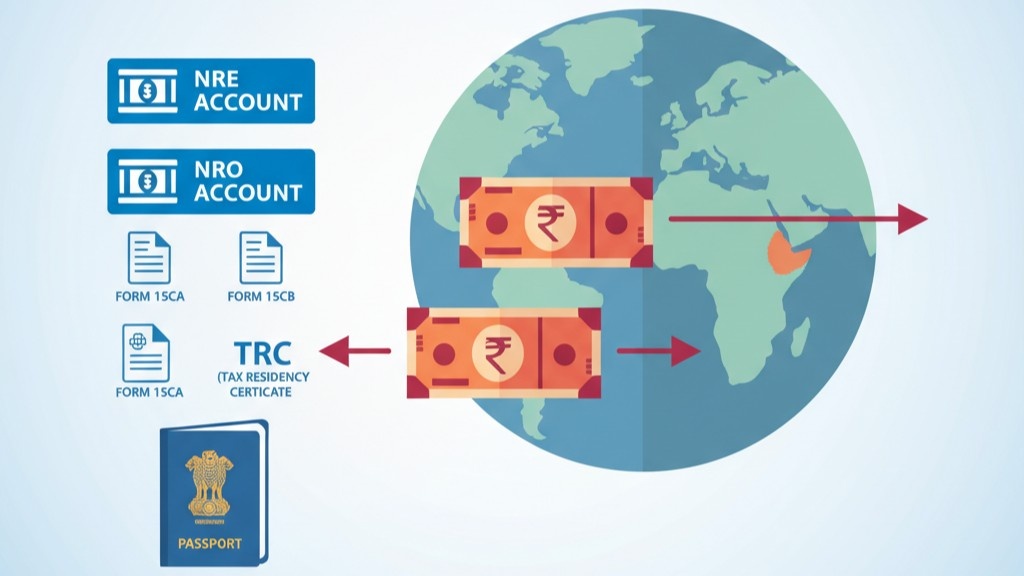
Moving money from NRO to NRE or overseas. Rent, interest, and capital gains sitting in your NRO account are usually taxable in India. If your taxable transfers to yourself abroad exceed ₹5 lakh in the year and you have no AO certificate, expect Part C + Form 146. Below ₹5 lakh, Part A.
Repatriating property sale proceeds. When you sell Indian property, the buyer deducts TDS under Section 393 (old 195). If you obtained a lower/nil certificate under Section 395 (old 197), your Form 145 is Part B — no Form 146 needed. Without it, and with proceeds above ₹5 lakh, it’s Part C + Form 146. This connects directly to our guides on TDS when an NRI sells property and repatriating sale proceeds.
Repatriating rent, interest, or dividends. These Indian-source incomes are generally taxable. Decide taxability first, then pick the Part using the table above. Keep your TDS proofs — they support the filing.
Personal and family remittances. Gifts, family maintenance, education, or medical expenses are often either non-taxable (Part D) or fall in the exempt list where no filing is needed. Your bank will confirm based on the purpose code — but note that many banks still ask for a Part D filing as a control measure.
Claiming a treaty (DTAA) rate. If a tax treaty gives you a lower rate, you still need to support it with a Tax Residency Certificate (TRC) and Form 10F. That requirement carried over unchanged.
How to file Form 145 online, step by step
The whole process can be done from outside India.
- Confirm taxability and pick your Part (A, B, C, or D) using the table above. This is the step that most affects whether the bank accepts your filing.
- If Part C, get Form 146 first. Add your CA on the Income Tax portal (Profile → Authorised Partners → My Chartered Accountant), and have them prepare, UDIN-stamp, and e-verify Form 146. You’ll reference its acknowledgement number in your Form 145.
- Log in to the Income Tax e-Filing portal with your PAN and open e-File → Income Tax Forms → File Income Tax Forms → Form 145.
- Fill in the details — remitter (you), remittee (with the mandatory foreign TIN), remittance amount and purpose category, and the tax/TDS position.
- e-Verify and submit using DSC or EVC. (DSC is mandatory for TAN users.) You’ll get an acknowledgement number and transaction ID by email and SMS.
- Hand the pack to your AD bank — the Form 145 acknowledgement, Form 146 (if Part C), your A2 form, and supporting proofs. The bank then processes the remittance.
Made a mistake? A filed Form 145 can be withdrawn within 7 days of submission and re-filed — the same relief that existed for 15CA.
Documents and the bank pack
- PAN and passport (visa page for NRIs; OCI card for OCI holders)
- TRC + Form 10F if you’re claiming a DTAA rate
- AO certificate (Section 395) if you have one — this puts you in Part B
- TDS proofs and challans
- A2 form (bank’s foreign-exchange declaration) and the correct RBI purpose code
- Form 145 acknowledgement, and Form 146 if your case is Part C
Penalties and the mistakes that cause them
The penalty framework moved from the old Section 271-I to Section 462 of the Income-tax Act, 2025 — but the sting is the same: up to ₹1 lakh for failing to file Form 145 when required, or for filing inaccurate information.
Two things NRIs underestimate:
- It’s event-based. One Form 145 per remittance — there’s no annual consolidated filing. If you make several taxable transfers, each needs its own form, and a penalty can apply per instance.
- A wrong TDS position carries its own tail. If tax that should have been deducted wasn’t, you remain liable for it, plus interest — separate from the ₹1 lakh form penalty.
The common, avoidable errors: using Part A when your aggregate already crossed ₹5 lakh; filing Part D for something actually taxable; skipping Form 146 on a taxable Part C remittance; a Form 146 without a valid UDIN; filing after the remittance instead of before; and mismatches between the amounts on Form 145 and Form 146.
Which form applies to my remittance — old or new?
The rule is simple and it hinges on the date of the remittance, not the date of the underlying transaction:
- Remittance completed on or before 31 March 2026 → the old Form 15CA / 15CB remains valid.
- Remittance made on or after 1 April 2026 → you must use Form 145 / 146.
So even if your property sale or contract dates from 2025, if the money actually leaves India in the 2026-27 year, you’re on the new forms.
Frequently asked questions
Are Form 15CA and 15CB still valid?
Only for remittances completed on or before 31 March 2026. For any remittance made on or after 1 April 2026, you must use Form 145 and Form 146.
Is Form 146 always required above ₹5 lakh?
No. Form 146 (the CA certificate) is required only for Part C — a taxable remittance above ₹5 lakh where you do not hold an Assessing Officer’s certificate. If you have an AO certificate under Section 395, you file Part B and skip Form 146.
Is UDIN mandatory on Form 146?
Yes. Under the new framework, the Chartered Accountant must generate a UDIN from the ICAI portal for Form 146. This is a new requirement that did not apply to the old Form 15CB.
Who files Form 145 — the sender or the recipient?
The person in India making the payment (the remitter) files Form 145, before the money is sent.
What is the penalty for not filing Form 145?
Up to ₹1 lakh under Section 462 of the Income-tax Act, 2025, for non-filing or for furnishing inaccurate information — applied per remittance, since the form is event-based.
Can I withdraw a Form 145 after filing?
Yes, within 7 days of submission, after which you can re-file with the corrected details.
My property deal was in 2025 but I’m remitting in 2026 — which form?
Form 145 / 146. The date the remittance actually leaves India governs, not the date of the original transaction.
Need help filing Form 145 or Form 146?
Getting the Part right, coordinating the CA certificate and UDIN, and assembling a bank pack that won’t bounce can be fiddly — especially from a different time zone. If you’d rather have it handled correctly the first time, ask us your question here and we’ll guide you through your specific case.
Official sources referenced in this guide
This guide is based on publicly available information from official Indian government and regulatory authorities. Forms, sections, and thresholds change; verify the current position before acting.
Income Tax Department of India — Form 145 and Form 146, filing portal, and official FAQs — https://www.incometax.gov.in
Income-tax Act, 2025 & Income-tax Rules, 2026 — Sections 393, 395, 397, 462 and Rule 220 governing foreign-remittance reporting — https://www.incometax.gov.in
Institute of Chartered Accountants of India (ICAI) — UDIN generation for Form 146 — https://udin.icai.org
Reserve Bank of India (RBI) — FEMA rules, purpose codes, and outward-remittance requirements — https://www.rbi.org.in
Disclaimer
This article is published for general information only. It is not tax, legal, or financial advice, and it is not a recommendation. Forms, section numbers, thresholds, and procedures under the Income-tax Act, 2025 change over time and depend on your individual circumstances. Readers should verify the current rules on the Income Tax Department portal and consult a qualified Chartered Accountant before filing or remitting. The website and author accept no responsibility for decisions made based on this content.